Deep Learning for Medical Imaging
Build image classifiers for X-ray, MRI and OCT with modern deep learning.
- Price
- $699
- Length
- ~14 hours
- Mentoring
- 1:1 call + 24h Q&A
- Start
- Anytime
Your learning path
From where you are to where you will be
Before the course
- Python and basic machine learning.
- A laptop and a free Google account
- About 14 hours, at your own pace
After the course
- Train convolutional networks on medical images
- Use transfer learning and augmentation well
- Compare CNNs and vision transformers
- Evaluate imaging models honestly
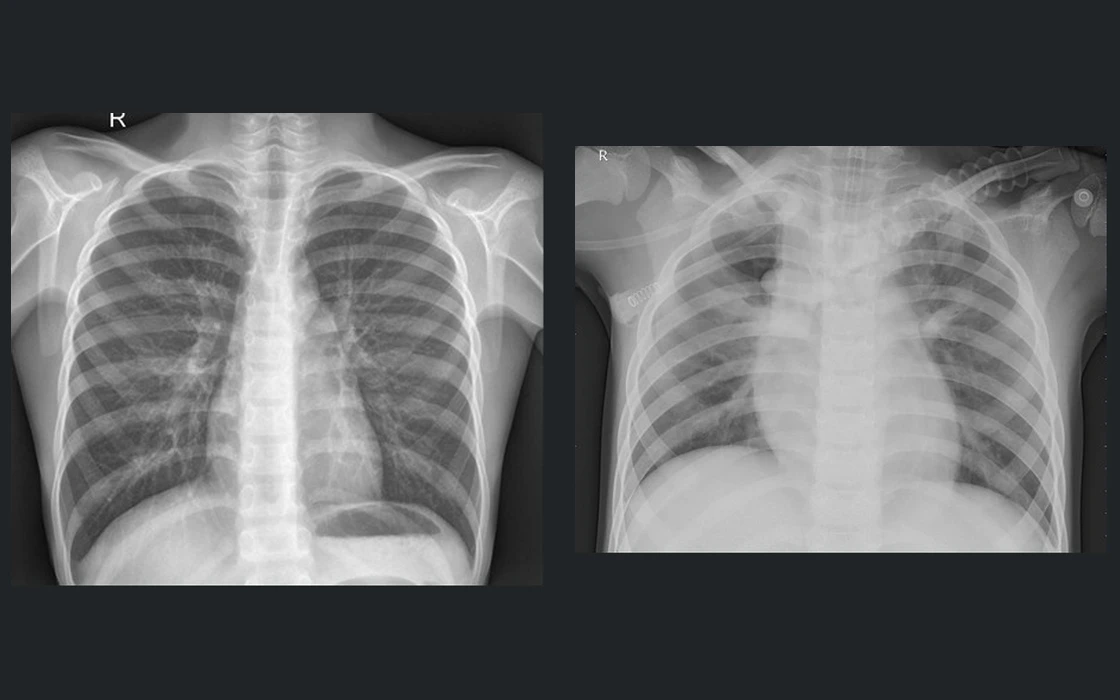
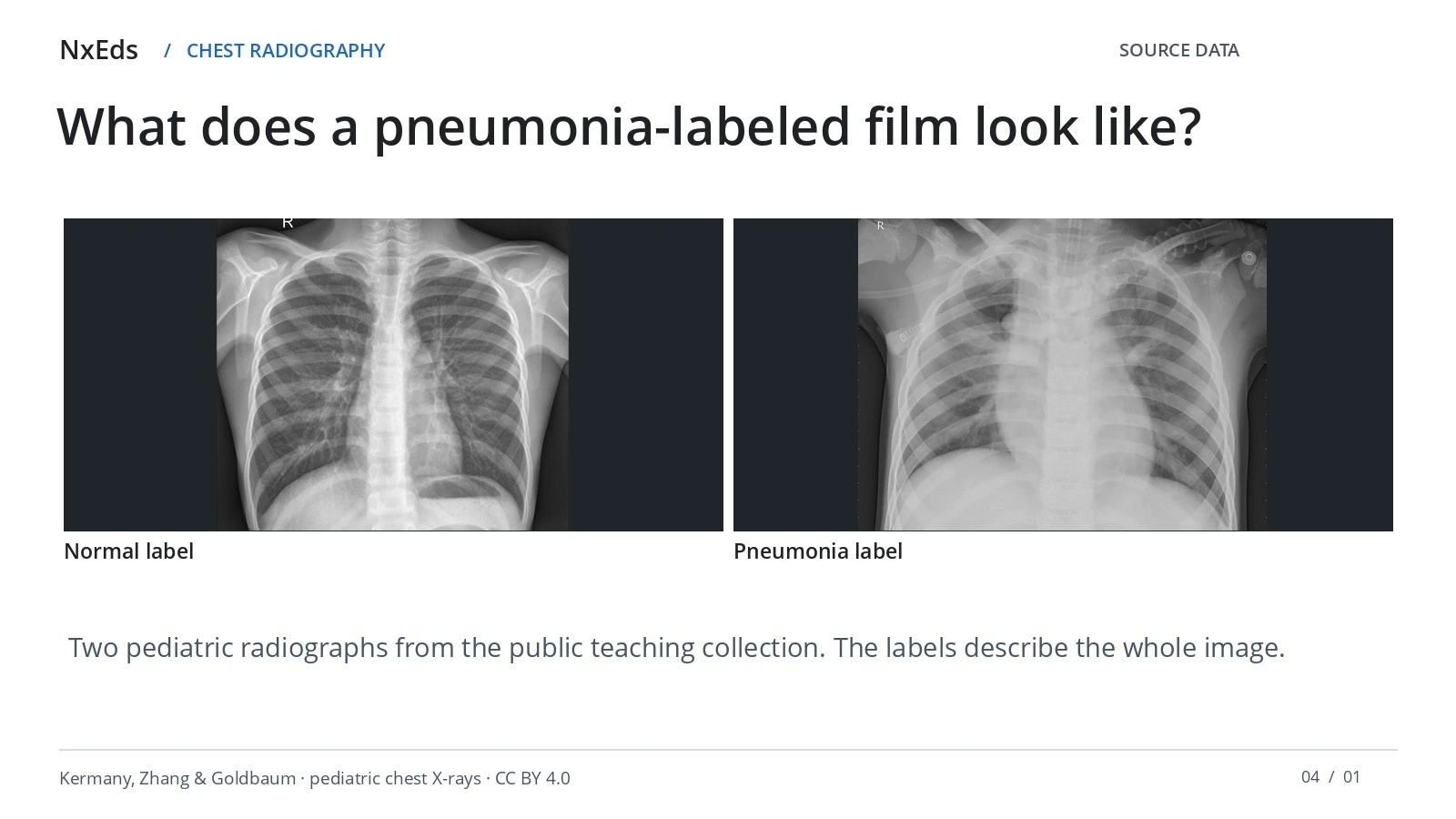
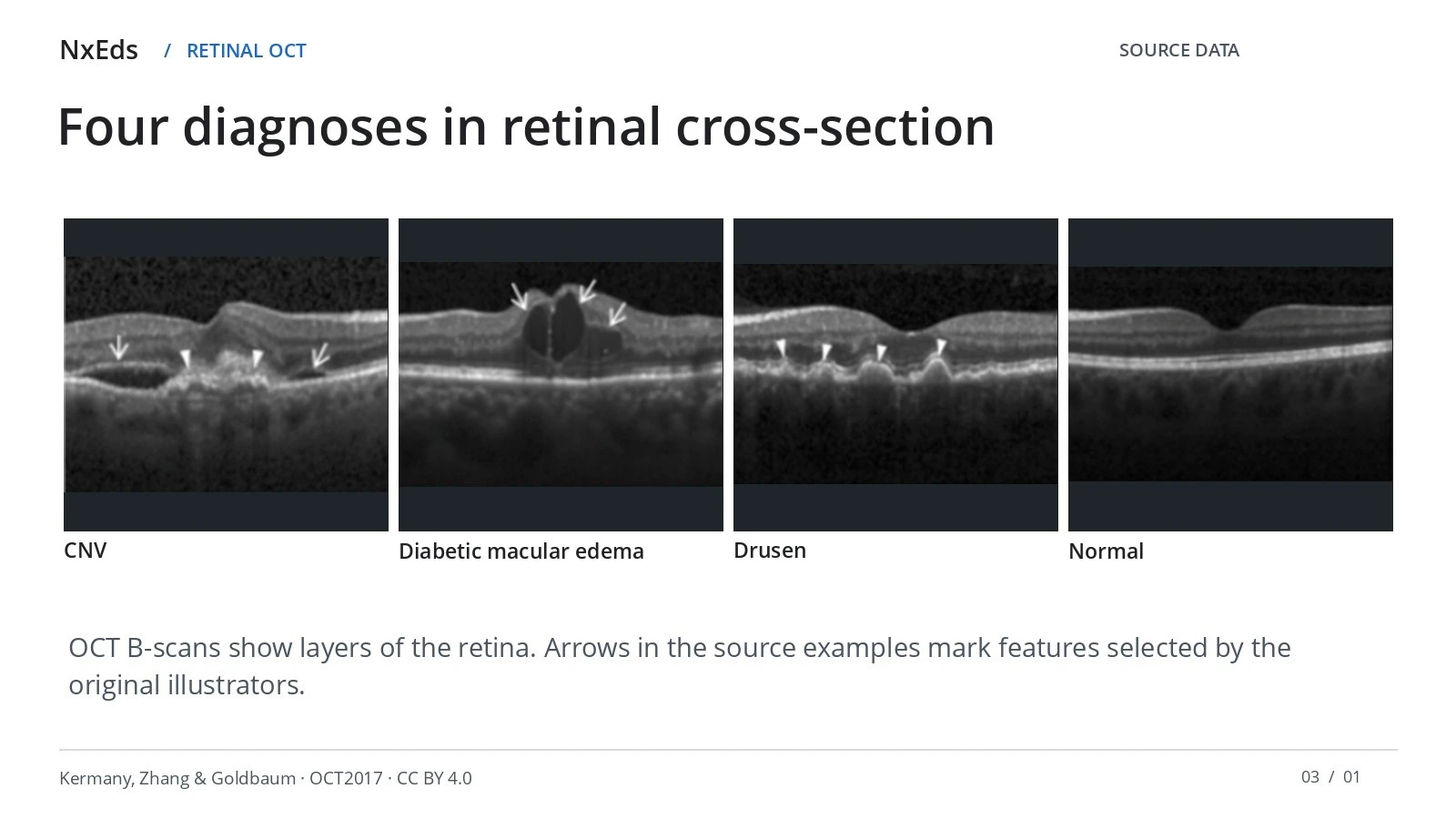
Real data, real results
A look inside the course
Curriculum
What you will study, lesson by lesson
Day 1: your question channel opens
Ask anything about the lessons or your mini-project. A mentor answers within 24 hours, for as long as you are taking the course.
- 1
Module 1: How CNNs see images
Convolutions, pooling and feature maps.
- Convolutions and filters
- Pooling and feature maps
- Training a small CNN
- 2
Module 2: Transfer learning
Start from pretrained models.
- Pretrained networks
- Fine-tuning strategies
- Freezing and unfreezing layers
- 3
Module 3: Augmentation
More robust models from limited data.
- Why augmentation helps
- Safe augmentations for medical images
- Avoiding unrealistic transforms
Your 15-minute 1:1 call
Book it whenever you need it most: to get unstuck, check your progress or plan your mini-project with a mentor.
- 4
Module 4: Classifying X-ray and OCT
Hands-on with two public datasets.
- Chest X-ray classification
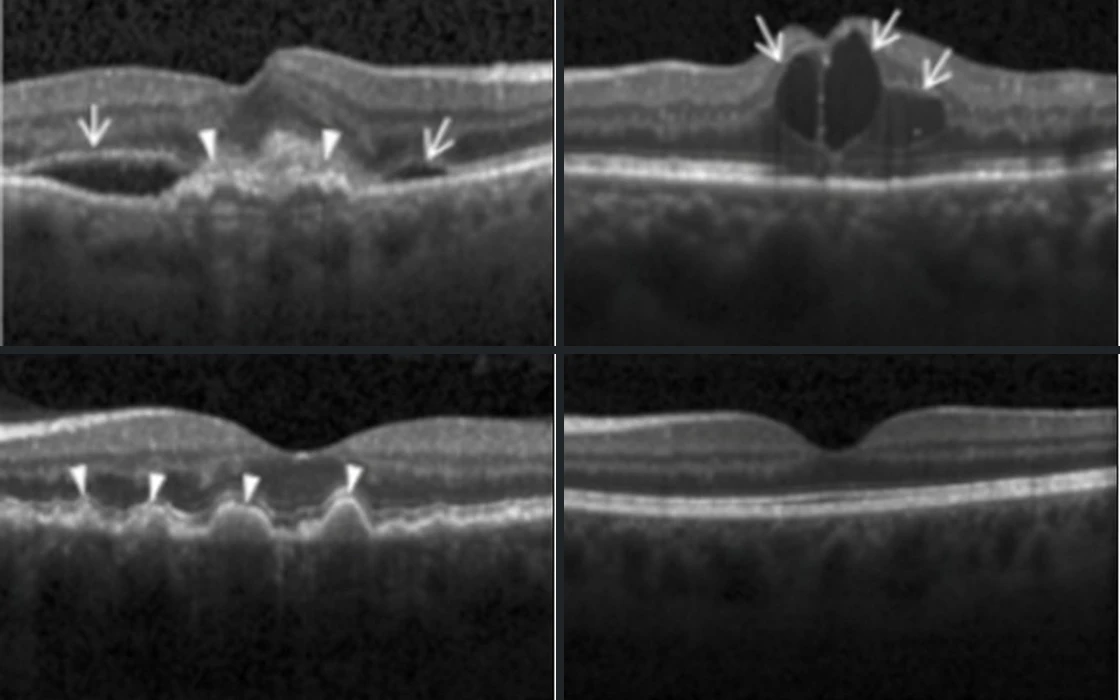
- Retinal OCT classification
- Comparing results
- 5
Module 5: Vision transformers
When and why to use them.
- How vision transformers work
- When they beat CNNs
- Practical tips
- 6
Module 6: Mini-project
Build and evaluate your own classifier.
- Choose a dataset
- Train and tune
- Evaluate and present
Certificate
Awarded when you complete all modules and the mini-project.
Before you start
Python and basic machine learning. Content is suitable for pre-med students and professionals alike.
Included
Everything in this course
About 14 hours
Video lessons and readings.
Hands-on notebooks
With public, de-identified data.
15-minute 1:1 call
One-on-one with a mentor.
24-hour question channel
Ask anytime, answers within 24 hours.
Certificate
On completion.
Self-paced
Start anytime, 12 months of access.
Go further with a mentor
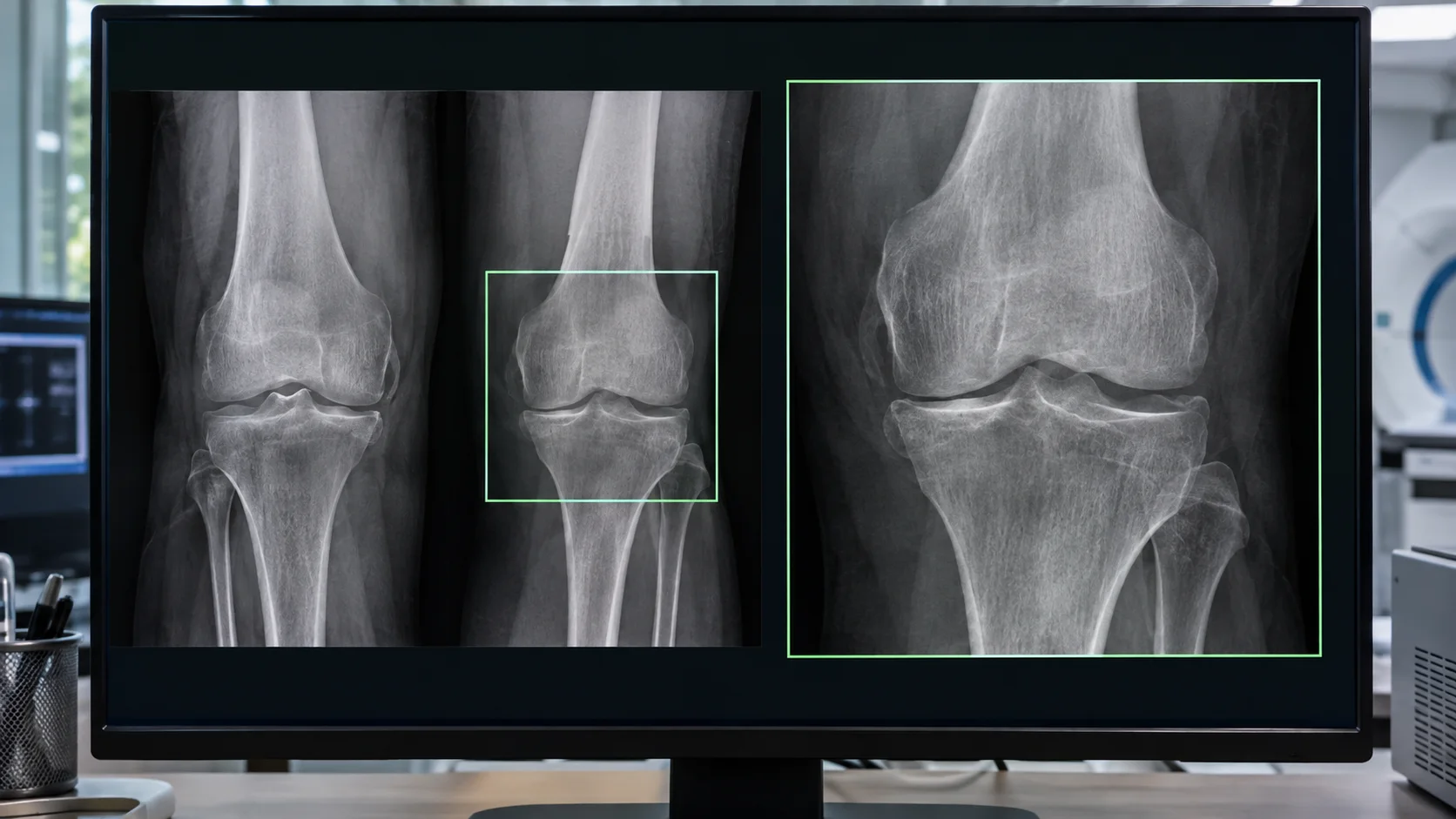
Put these skills to work: Predict Knee Osteoarthritis from X-rays
Train a deep-learning model to grade knee osteoarthritis on X-rays, then show clinicians why it made each call.
Related courses
Medical Image Segmentation with U-Net & MONAI
Outline organs and lesions pixel by pixel with U-Net and the MONAI framework.
Learn more →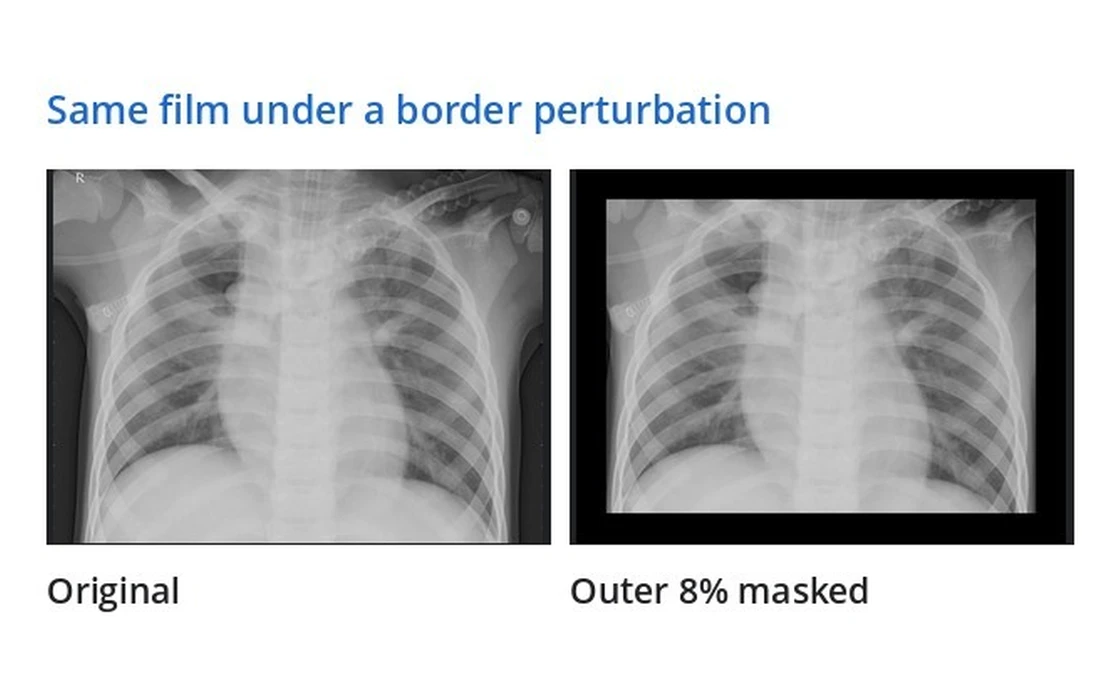
Explainable AI for Clinical Models
Show clinicians why a model made its prediction, and learn when explanations can mislead.
Learn more →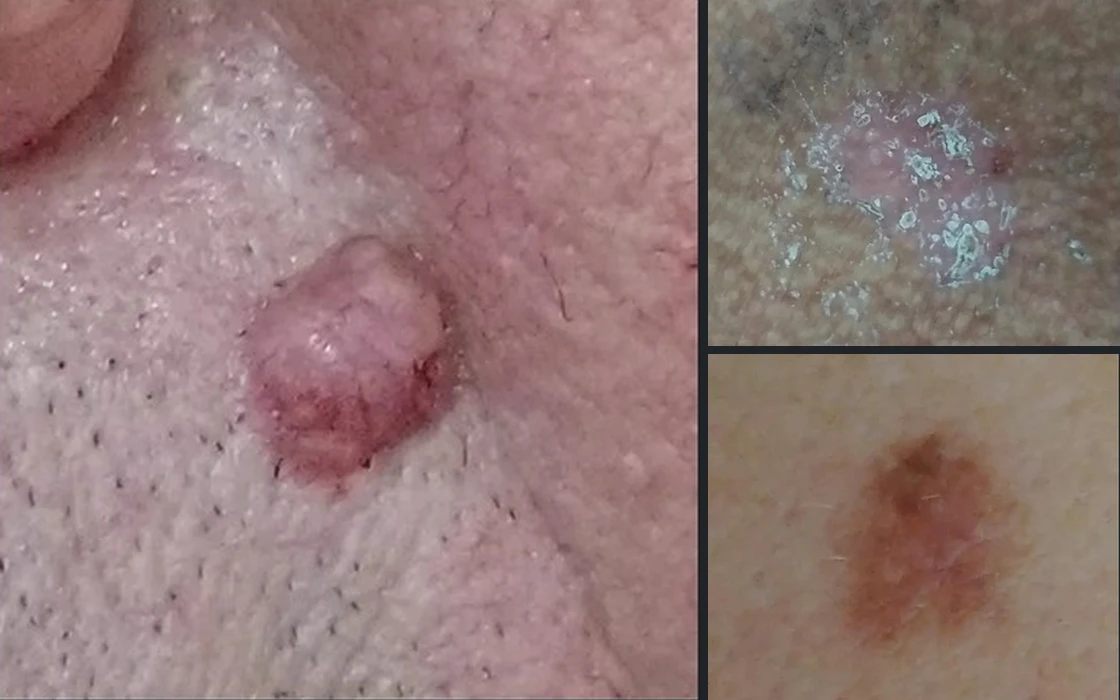
AI for Cancer Detection: From Skin to Pathology
Apply AI to cancer detection in dermatology images, endoscopy and digital pathology slides.
Learn more →Start this course today.
Self-paced, with a 1:1 mentor call, a 24-hour question channel and a certificate.